
TOOLBOX TALK: Pre-Flight Checklist Essentials
RATTLIR SAFETY SERIES - "STRIKE BEFORE IT BITES"
Purpose
A thorough pre-flight process is the foundation of safe and compliant sUAS operations. FAA Part 107 requires the Remote Pilot in Command (RPIC) to ensure aircraft airworthiness, environmental suitability, and crew readiness before each flight. Industrial environments, such as substations, pipelines, and power plants, introduce additional hazards that make disciplined pre-flight procedures even more critical. This toolbox talk combines FAA requirements, RATTLIR’s industrial inspection needs, and human-performance considerations to ensure safe, repeatable, and effective pre-flight practices.
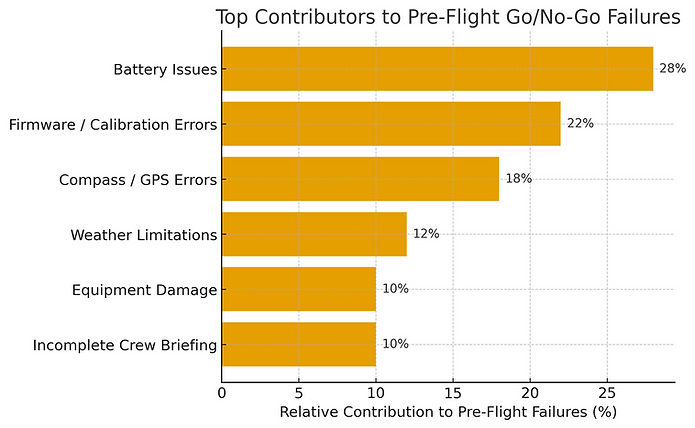
Figure 1 - Top Contributors to Pre-Flight Go/No-Go Failures
FAA and RATTLIR Pre-Flight Responsibilities
The RPIC is responsible for verifying aircraft readiness, environmental suitability, and crew preparedness:
-
Confirm the aircraft is in a condition for safe operation per FAA Part 107.15.
-
Ensure all required documents, waivers, and airspace authorizations are available.
-
Review mission objectives, airspace classification, and operational limitations.
-
Validate that all crewmembers understand their roles and responsibilities.
Pre-Flight Steps
The RATTLIR JSA Pre-Flight section outlines essential steps that must be completed before every mission:
-
Inspect propellers, arms, motors, gimbal, sensors, and airframe for damage or wear.
-
Verify firmware, calibration status, and aircraft configuration settings.
-
Check battery condition, cycle count, temperature, and secure installation.
-
Review weather data including wind speed, gust spread, visibility, and temperature.
-
Confirm launch and recovery zone is clear of personnel, vehicles, and obstructions.
-
Conduct a 360-degree hazard scan for EMI sources, power lines, steam plumes, or moving equipment.
-
Perform a brief hover test to verify stable GPS lock and attitude control.
Industrial and Utility Pre-Flight Considerations
Industrial and utility environments introduce additional hazards that must be included in pre-flight planning:
-
Perform EMI/GPS interference checks before flight – look for warning messages or orientation drift.
-
Identify energized equipment, overhead conductors, cranes, or vehicles near the flight path.
-
Account for heat sources such as HRSG vents, boilers, or process exhaust stacks.
-
Verify safe standoff distances and emergency landing zones.
Crew Coordination and Communication
Effective teamwork between the RPIC, Visual Observer (VO), and payload operator prevents pre-flight oversights:
-
Conduct a structured crew briefing.
-
Confirm hand signals, verbal commands, and emergency triggers.
-
Ensure VO understands their scanning responsibilities and hazard callouts.
-
Review Return-to-Home (RTH) behavior and landing zone expectations.
Human Performance Factors Affecting Pre-Flight Readiness
Human factors influence pre-flight effectiveness and must be actively managed:
-
Rushing increases the chance of missing critical checklist steps.
-
Task saturation from mission setup can reduce focus during aircraft inspection.
-
Fatigue or stress can hinder equipment assessment and hazard recognition.
-
Complacency on repeat inspection flights can cause oversight of damage or drift risk.
Go / No-Go Decision Criteria
The final pre-flight determination must be based on aircraft condition, environment, and crew readiness:
-
If any checklist item is not satisfied, the flight must not begin.
-
Weather or wind outside manufacturer or RATTLIR limits results in a “No-Go” decision.
-
Unstable GPS or calibration issues must be resolved before liftoff.
-
RPIC has full authority to delay or cancel flight without external pressure.
Discussion Questions
-
Do you understand the mandatory pre-flight steps required?
-
Are you aware of the environmental and industrial hazards impacting today’s pre-flight checks?
-
Do you have a clear crew briefing plan and Go/No-Go criteria for today’s flight?
RATTLIR Takeaway
Safe mission execution begins long before takeoff. A disciplined, repeatable pre-flight process prevents aircraft malfunctions, loss of control, and hazardous encounters with industrial or utility environments. RATTLIR strikes before it bites by reinforcing strong pre-flight methodology, clear communication, and deliberate Go/No-Go decision-making.